The Allegorical Horror of Conversion Therapy: Leviticus Review
An allegory of the horrors of conversion therapy and the beauty of queer intimacy and love. A spoiler-free review.

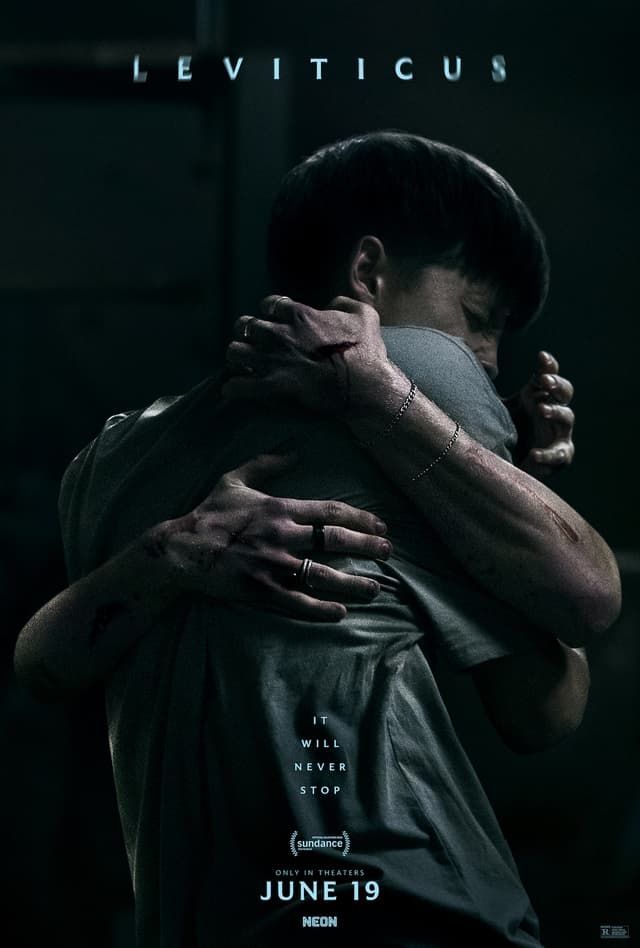
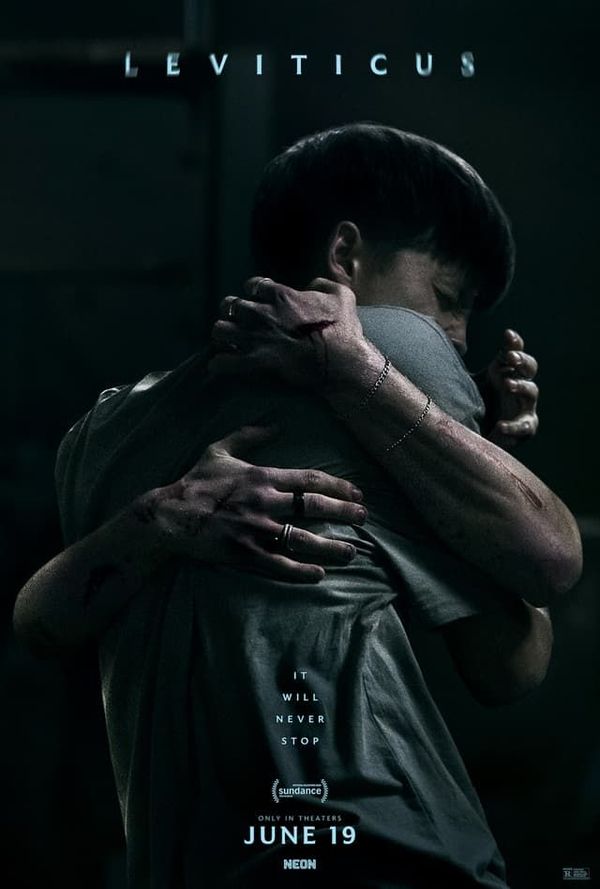
When coming out of the Music Box Theater at the Chicago Critics Film Festival, I got the feeling that the film was a spin on It Follows but with a queer bent. The film Leviticus directed by Adrian Chiarella in his debut follows two teenage boys Naim (Joe Bird) and Ryan (Stacy Clausen) whose burgeoning love for each other is threatened by the religious community in the small Australian town they live in.
However, the situation becomes even deadlier when a healer comes into town and summons an entity that takes the form the person desires most each other. What the film excels at is weaving the horror of the supernatural with the horror of conversion therapy.
Before the films premiere, I got the chance to interview some local Chicagoans who were going to see the film. Lucca Castaneda, a Chicagoan filmgoer, pointed out that the concept alone was interesting. “I think the whole monster taking the form of the person they loved the most, is fascinating, and I think setting that theme into a conversion therapy story, I think, is really interesting.”
Sydney Fenner, another Chicagoan filmgoer, pointed out that the film distributor Neon was enough to go get the tickets to see Leviticus.
Maeren Quirk, another filmgoer, saw the social commentary as something that was worth seeing in the film.
The film uses the supernatural as subtext of the dangers of conversion therapy and how it threatens the lives of queer men, women, and gender-nonconforming individuals. While set in Australia, the fear of being sent to conversion therapy is rampant in the United States with the banning of conversion therapy overturned in Colorado being one example.
The film illustrates how conversion therapy affects both victims and perpetrators. It shows the damage and fallout of conversion therapy and the suffering that follows with the perpetrators and the victims suffering greatly.
However, the film doesn’t use the stereotypical homophobes that are against queer individuals. In a review of the film after its premiere at Sundance Film Festival, journalist Benjamin Lee points out that “He also avoids obvious Bible-thumping horror stereotypes with his portrayal of the town’s religious community, realising there’s something far scarier about vile homophobia emerging from warmer, seeming well-meaning folk such as Naim’s loving mother”.
The film shows that the scariest kind of homophobia is not the one where it comes from a place of fear, rather from a place of misguided “good” intentions that results in greater evil. But, what the film excels at is rooting for two main leads.
Naim and Ryan’s love is the crux of this film. Their love is what saves them from death. Queerness in media has a reputation of associating same-sex attraction with death or tragedy. Leviticus subverts this trope by showing how queer love saves them from the entity rather than destroying them.
Not being alone and being with ones you love and having the strength to protect them from the evils of homophobia is the message that this film is projecting. But it also points out that cutting toxic people off who are not accepting of your queer authentic self is valid. Mia Wasikowska’s character is one example.
Mia Wasikowska plays Naim’s well-meaning mother who creates more suffering for Naim by denying and downplaying his love for Ryan. Treating his queer identity as a problem that needs to be solved by religious faith. That’s what makes this film terrifying and realistic. It’s not the entity that terrifies queer communities, it is the subtle homophobia that dresses itself as benevolent, well-meaning, and wanting what’s best for you in an oppressive manner.
Bejamin Lee points out that, like It Follows, it is an allegorical horror of something that makes us human, our desires. Lee states this saying, “Like It Follows, which its owes a heavy debt to, it can also be viewed as a story about HIV/AIDS and the devastation that can come from desire. This feeling might kill us both, but how can we deny it?”
This film excels at using the idea that what we desire most can kill us, Leviticus manages to spurn a love story that shows the horrors of conversion therapy and the power of queer intimacy and young love. The film is a tale that is relevant and urgent more than ever with the rise of homophobic and transphobic hate groups having more voice in politics than ever before. Leviticus is a radical film that breathes new life into an overused formula that asks, “what if our desires were trying to kill us” with a queer angle.
The film gives hope to queer youth who live in small towns run by conservative religious groups and shines a blinding light on conversion therapy. Leviticus is an allegorical horror film that is a cautionary tale on the nightmares of conversion therapy and shows how the power of queer love can not only free us from our demons but summon the courage to fight back against the forces that wants to bury queer folk. By accepting our queer desires, wants, and needs we are fighting against the evils of homophobia. Whether in the daylight or in the dark, we will always fight for our existence.