Distance Between Friendships: Interview with Zach Schnitzer and Nate Simon
An interview about Loafers a film about surviving post-graduation, friendships, love, and adulting

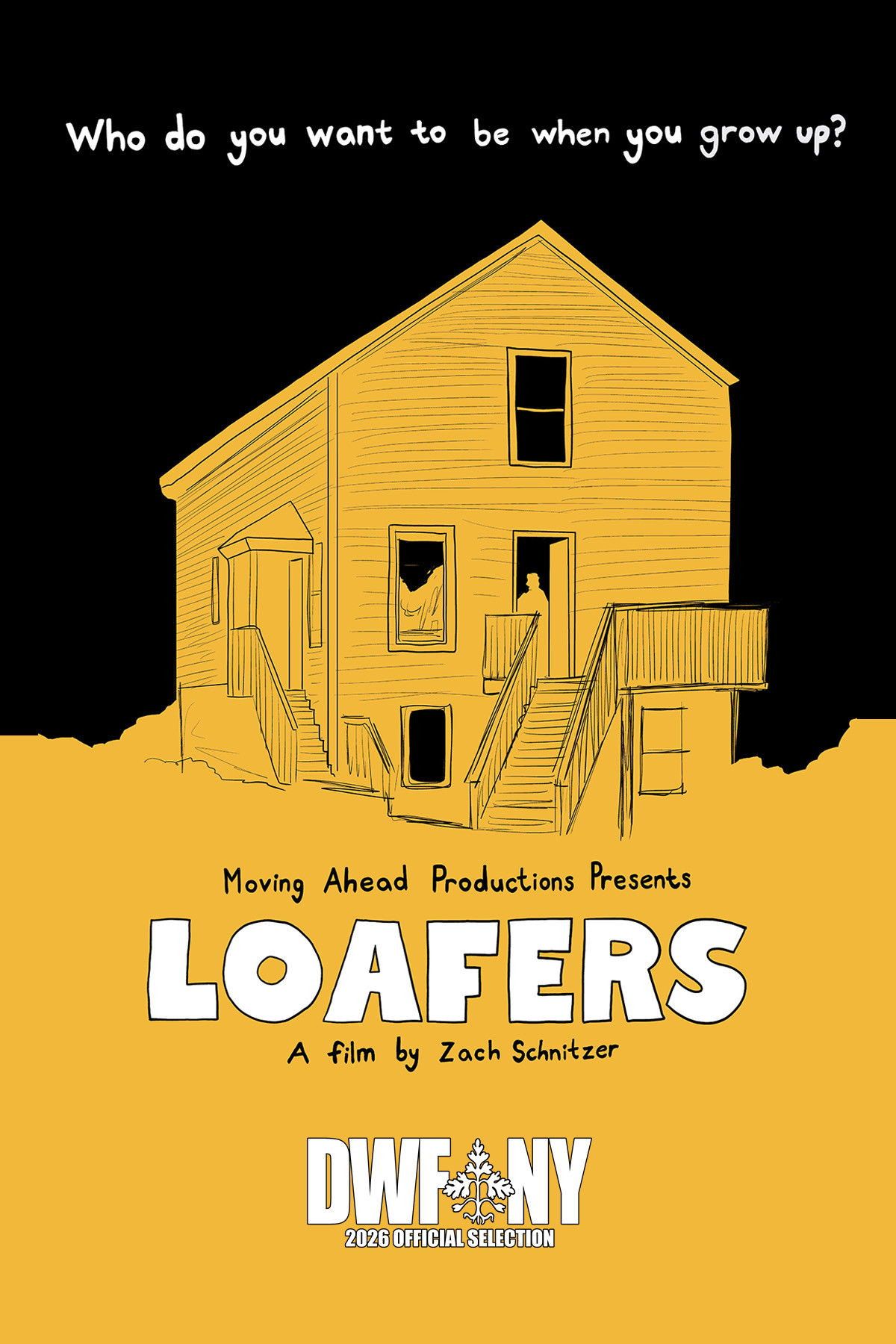
Post-graduation is hard especially when you are either looking for a job or a place to live. However, Zach Schnitzer’s film Loafers asks; can friendships survive after college? Loafers offers to answer this question while exploring themes of male vulnerability, male and female friendships and coming-of-age in your 20s.
Loafers is set in Chicago with the two main leads being Issac played by Zach Schnitzer and Cameron played by Dan Haller. The film includes a cast that are multidimensional and full of life and depth on screen with their problems, their desires, and their day-to-day lives portrayed with realism and grace. The film doesn’t have high stakes or action-packed sequences. Rather it has naturalistic dialogue echoing the works of Richard Linklater’s early films such as Slacker and Dazed and Confused.
With help from a colleague, I got the chance to interview the intrepid director and producer of Loafers who are related. Zach Schnitzer, a DePaul alumni graduated in theater in acting and became more involved in filmmaking. Nate Simon who produced the movie hailed from New York City helping his cousin finance and polish the film before it’s debut.
I sat down with them and discussed with them their craft, influences, and production of the film.
What led you to making the career decision of becoming a filmmaker?
Zach: Oh, man, I mean, there are a lot of things. I think, first and foremost, I just fell in love with movies through acting. Like, I just started watching more movies as an element of studying acting, and then I started becoming really interested in other elements and writing, and like, the active storytelling.
What was the inspiration for creating Loafers with Zach Schnitzer?
Nate: The inspiration for working on Loafers with Zach was that I made a movie of my own in 2022, which when we filmed it. It’s called My Friends, and it’s kind of the same kind of production framework, get a small group of people, 4 people on the crew, you have $5,000, 11 days, go and make a movie. I did that and it turned out okay. I think Loafers turned out dramatically better personally.
Nate: After that production, Zach started writing his own script, I read every draft of the script, and I think Zach was just like, you’ve done this before? Do you want to try to do it again?
Zach: I basically was like, hey Nate, I wrote a script and I want you to make it. And it was like a statement.
So, it was basically sort of like a collaboration between you two.
Nate: I mean, I’ll say, also, this is kind of an important contextual piece of information. Zach and I are cousins. So, we’ve known each other since basically, we were both born. He was the cousin who acts, and I was the cousin who directs, and it was like, oh, actor, director.
When you were directing this film, what were some of the challenging aspects of being a director?
Zach: I think the biggest challenge…Well, I think I just feel like a beginner. And just the idea of reminding myself that I am a creative person and an artist and I deserve to be in this position, and whether or not my point of view on a specific scene or dialogue is the best in the world, does not determine whether or not I should be a director, and these people should listen to me about my creative vision.
So I think the biggest hardship is just imposter syndrome. I think a challenge for every set is making sure you learn how to speak to every actor and every crew member, how they need to be spoken to, not like some universal language where they need to meet you where you’re at. You need to meet them where they are.
Nate: Which is a tremendously hard thing to be able to do, especially when you’re making a movie as fast and as low resource as we are, and we’re basically asking everybody for tremendous amounts of favors. Someone asked me this question of like, what did you learn from Loafers? And I was like, I learned how to be a better director and how to work with people, and talk to people and communicate with people clearer.
What were your main influences during your screenwriting process?
Zach: My friends in my life and my anxiety. As I was finishing college, I was sort of like trying to write a hopeful version of it, even though it’s like, you could look at this movie and say it’s like boring as hell and actually hopeless, but I think that a lot of the relationships are wholesome. I think my friends who are in this movie are all very talented actors.
So, I wanted them to be in a movie. Not all of them were, a lot of them are working, but not all of them. I think that that is messed up. So, I wanted to make something, I wanted to write something that we all can make together and have a memory of, make a time capsule of our lives. And I was anxious about what postgrad was gonna be like.
Nate: I brought some of my friends from college to work on the crew, and it’s like a really great blessing to not just have your friends be talented, but to be able to work with them and to have them be willing to work with you, is really special. I think this whole movie’s about friendship, it’s very clear that it was made by friends who were so excited to be working with their friends.
Now, the film is set in Chicago. What was your creative approach when filming this city? Did you make the city a character or a backdrop to your story?
Zach: I don’t know if Chicago was necessarily a character. I think it had a huge influence on it. I think the biggest influence that the actual place had was the distance between friendships, which I think has a pretty big impact on the story and relationships. But yeah, I mean I set it here because this was my life. This is where I was living, and this is where me and all my friends were and I wanted to shoot something here.
Nate: I’ll say like, it could have been set elsewhere because people make movies that are like this. Like My Friends, which is the movie that I made, is not radically dissimilar from this, and it takes place in New York. But if Loafers was made in New York, it wouldn’t look the way it looks. It wouldn’t feel the way it feels.
So, basically, the city has sort of, like a vibe to it in a way, if that’s correct. Like, it’s something that says, I want to capture this vibe and I want to put it on the screen.
Zach: Yes, for sure.
Last question, what are some of your personal favorite movies that have inspired the film Loafers?
Zach: My favorite movie is Dazed and Confused. I think Richard Linklater will probably always be like a looming inspirational presence for me. But specifically, like, there’s a scene at the end of that movie when they’re on the football field, which is the famous sort of Matthew McConaughey, and he’s like, “you gotta keep living, man, L-I-V-I-N.”
There’s a lot of lines in that scene that are sort of, to me, feel incredibly real, like, a young person real way. In the same sentence, they say, like, if I look back at these high school years and they’re the best years of my life, remind me to kill myself. And it’s a very deep line. I think that his influence, from that movie and his other movies as well, is like, always gonna be in me, just because I love the way that he sees characters and how people are multidimensional.
Nate: I think something that’s really special, in Dazed and Confused is that it lets characters have those two lines, where they say something very emotional and sincere, and then do something very silly, and nothing undercuts anything. Like, they’re not winking, there’s no joke. We’re not supposed to laugh at sincere emotion of these characters, we’re just supposed to feel it is really special.
After the interview, I watched the film and Q&A session which helped me understand more of the film and their honing of their craft. Loafers while not perfect it nonetheless an inspiring film that shows the power of male and female vulnerability, friendships, and living your life after graduation.
I will say that this film is worth watching if you have recently graduated from a university with a bachelor’s degree or master’s degree. This film is a testament to the power of mumblecore filmmaking and following the path of Richard Linklater.
I give this film a 4 ½ star review. There were some subplots I felt were left hanging and felt that they could have been resolved a bit better, but it’s a film that regardless of its flaws, sticks the landing in telling a story of friendship, vulnerability, and coming-of-age into adulthood.